Normally we prefer to let our work speak for itself. But Tovan has come a long way from where it was six months ago and we are genuinely proud of the progress.
Also, our families say they have no idea what we are doing and told us to get better at marketing. So here is a shot at both.
What is Tovan?
Wherever you are right now, look around. Chances are almost everything you see has something inside it called a printed circuit board, or PCB.
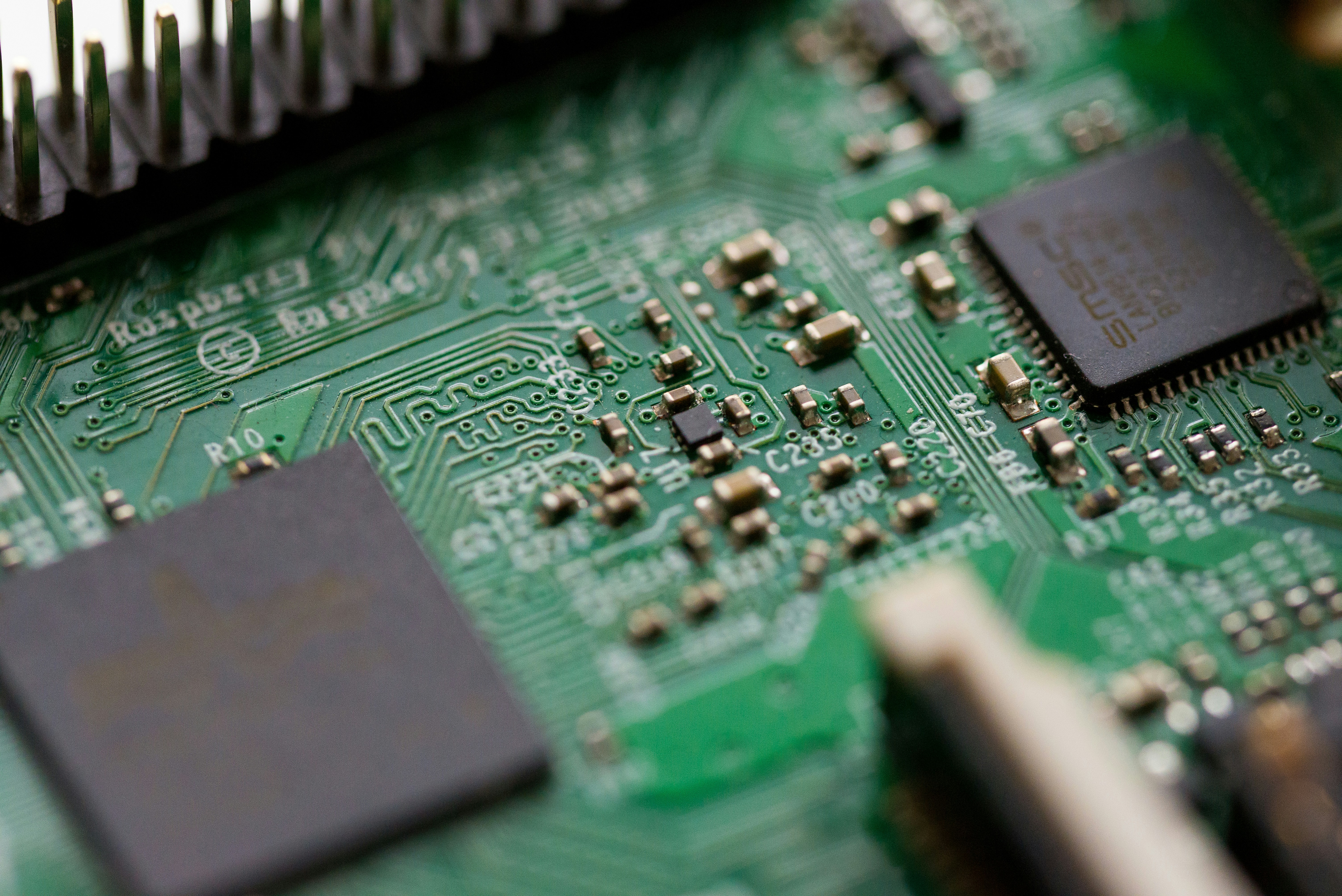
Printed Circuit Board
PCBs are the heart of modern electronics. They are in your electric toothbrush, your phone, your car. Everywhere. And they are difficult and expensive to make. Typically designed by an electrical engineer using specialized software, then manufactured using specialized machines.
Now imagine you have an idea for a product that needs one. Say it is a device that detects water leaks in your house and sends you a text notification. How do you get a prototype built?
Traditionally you would hire an electrical engineer to design the circuit, then a mechanical engineer to design a housing for it. Or you could go it alone, learn the software, buy a 3D printer, spend hundreds of dollars iterating on your design, and finally get something working after months of failure. We have done this. It is a good way to build character.* Not a good way to build products.
Tovan helps you skip all of that. Describe your idea and Tovan helps you build it, faster and cheaper than the traditional way.
We have already generated hundreds of boards and manufactured many of them. It is the tool we wish we had existed when we started.
*Suffering builds character.
Recent progress
Blocks: reusable core circuits
After reviewing hundreds of circuits generated in Tovan, we noticed something. The majority of them use the same core circuits. An MCU with USB-C power. A LiPo charging circuit. A buck regulator. The same fundamental building blocks showing up over and over again in completely different projects.
Every time a project needed one of these, Tovan was designing it from scratch. For users that meant longer build times, higher token usage, and more opportunities for error. Not a great experience.
So we fixed it.
We are calling them Blocks, only because we could not think of a better name and are open to suggestions. The idea is simple. Instead of reasoning through the same common circuits every time, Tovan now has a library of pre-built, verified core circuits it can drop directly into your design. Each Block is a complete, tested sub-circuit with known-good components already chosen.
For users this means three things: faster builds, lower cost, and more reliable designs.
We have already started rolling out the library and more Blocks are coming. We are also considering opening it up so users can contribute their own and share them publicly. Let us know if that is something you would want.
A better agent under the hood
Think of a large language model as gasoline. Every car runs on it, but the car itself determines whether you are optimizing for speed, efficiency, or cost. The harness we build around the model is the car. We are trying to build a reliable, cost-effective, easy-to-use car. And we have gotten significantly better at it.
We have improved how Tovan handles prompts, selects tools, and executes on the tools themselves. The result is faster builds, lower cost per design, and fewer errors. These cost savings are passed on to you, the user.
Less failures
If you are a previous user, you may have noticed that Tovan would occasionally stop responding or throw a timeout error. Fine, more than occasionally. It happened a lot. We spent weeks diagnosing and solving this and you should see far fewer issues going forward.
MAX mode
With the agent improvements in place, we are introducing MAX mode.
Tovan now lets you choose between two models. The standard model is fast, capable, and cost-efficient. It handles the majority of builds well and is the default. MAX mode brings significantly more reasoning power to the harder problems but costs more and runs slower.
Switch between them right in the chat interface. Use MAX when you are tackling something complex and want the most thorough result. Use standard for everyday builds and iterations. We have been testing this extensively and have been loving it. Hope you do too.

Max mode selection in chat box
Alpha Router
Routing is one of the hardest parts of PCB design, and it is something we would have loved to outsource. We have a lot on our plate and building an autorouter was the last thing we wanted to do. But every autorouter on the market was built for a different era. None of them are built for the agentic age.
Some people ask why we do not just have the model do the routing. We tried. It is expensive, error-prone, and falls apart fast when complexity increases. So after enough disappointment, we built our own. We are calling it Alpha Router, because we think it sounds good.
The new version is faster and more reliable than anything we were running before. There is still a lot of work ahead, but we are already routing boards that were impossible a few months ago.
That's All
Every one of these improvements makes Tovan faster, cheaper, and more reliable. And this is just what is worth writing about. The product gets better every single day.
If you have not tried it recently, now is a good time.
0 comments